EUROPE ↔ UNITED STATES
U.S. and EPO approaches to prior art
How analogous art and the problem-solution approach lead to different prosecution choices.
Read the analysis ↗Commentary on patent prosecution, Federal Circuit developments, and cross-border patent strategy. Explore the full Divergent archive, with European strategy articles easy to find.
A selected starting point for coordinating European innovation with U.S. patent strategy.
How analogous art and the problem-solution approach lead to different prosecution choices.
Read the analysis ↗Coordinate protection for product appearance across the two regimes.
Read the analysis ↗Understand how pending U.S. applications preserve future claim opportunities.
Read the analysis ↗71 articles in the library
Korea’s announced increase in its U.S.-dollar international search fee from $783 to $867, effective November 1, 2026, gives U.S. PCT applicants a reason to reassess ISA selection based on costs through the intended national-stage entry. Under the article’s…
Read articleMaking the USPTO’s Web Application Data Sheet (Web ADS) the default for supported utility and design filings can reduce preventable errors and the need for corrected ADS submissions after the filing receipt arrives. Guided entry, parent-application autofill,…
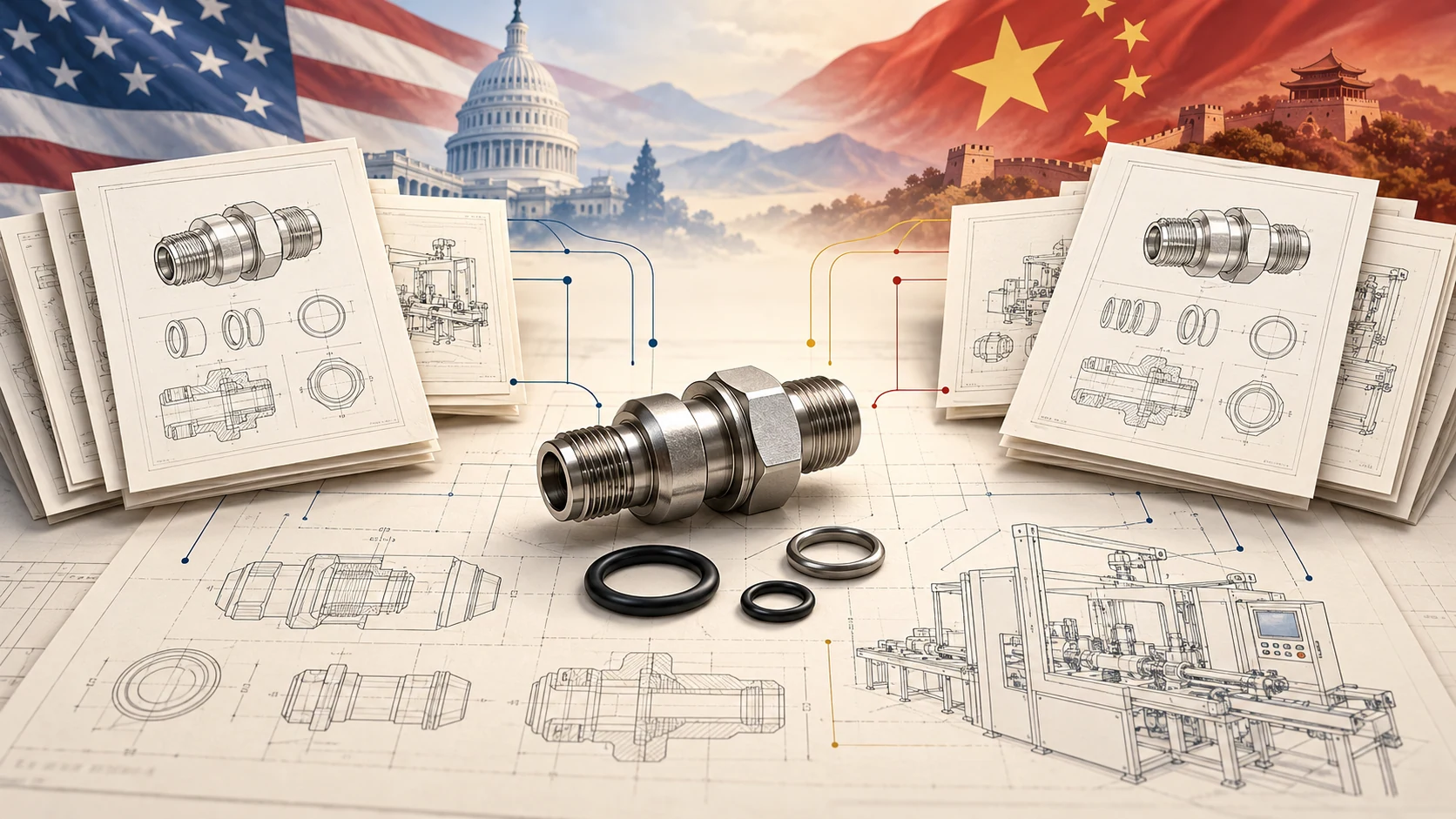
Read articleU.S. restriction practice and Chinese unity requirements determine which inventions may be examined together, but their different legal standards can produce different prosecution paths for the same disclosure. This article explains each system through…
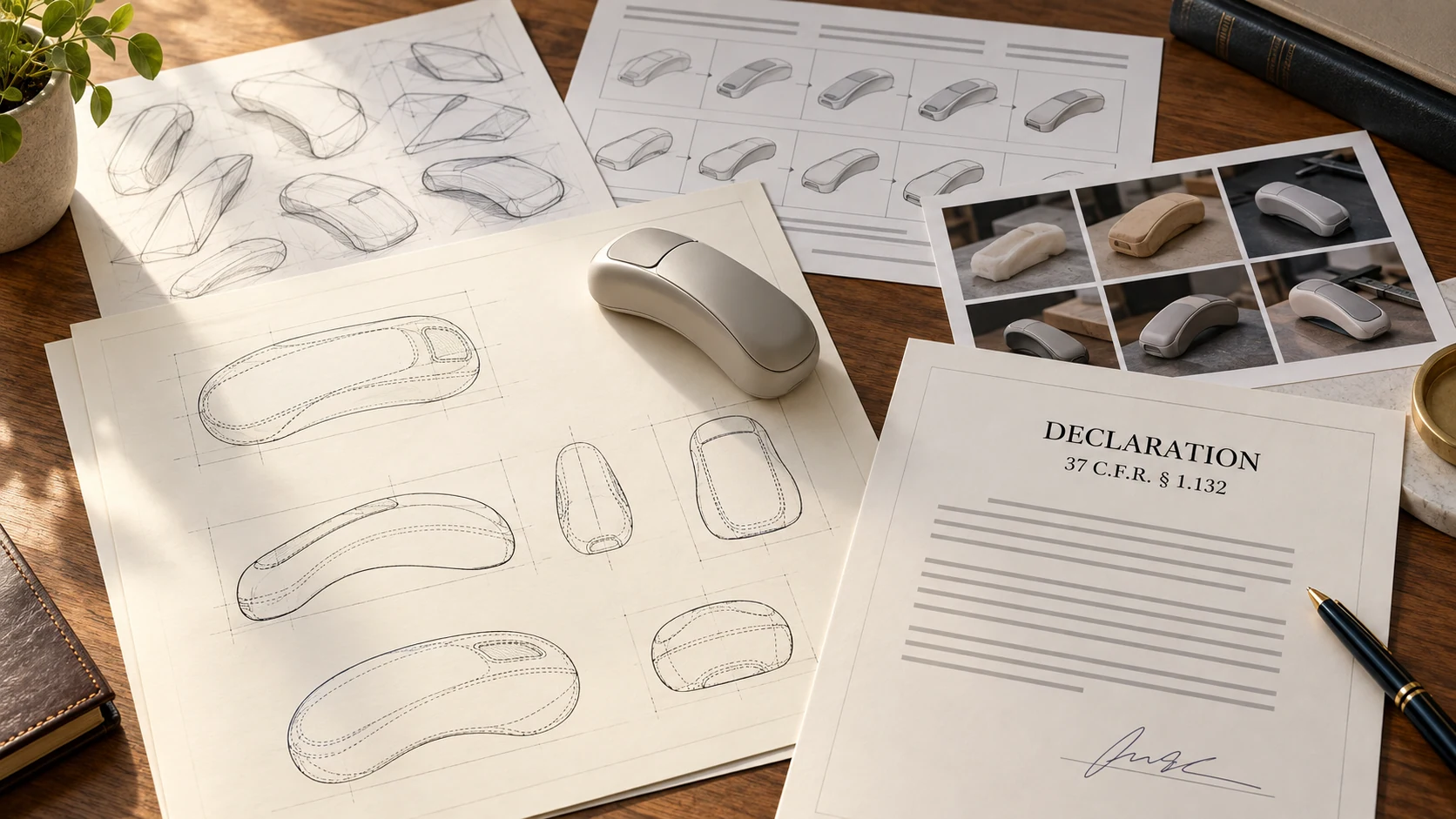
Read articleDeclarations under 37 C.F.R. § 1.132 can strengthen design patent applications by supplying evidence addressing ornamentality, obviousness after LKQ, and the connection between commercial success and the claimed design. Their persuasive value depends on…
Read articlePaying small-entity fees when undiscounted fees were required does not automatically invalidate a U.S. patent, but the error can create correction obligations, financial exposure, and enforceability risks. The analysis begins with eligibility when the…
Read articlePCT unity of invention and ordinary U.S. restriction practice apply different tests for determining which inventions may be examined together. PCT unity turns on a shared inventive technical relationship, while ordinary U.S. restriction requires independent…
Read articleThe USPTO’s PCT Informed Examination Request (PIER) pilot requires selected U.S. national-stage applicants to choose whether to proceed with examination, defer examination for twelve months, or expressly abandon the application after considering the…
Read articleA missing confirmation number can complicate the transfer of an unpublished patent application even when the client has provided a properly executed power of attorney. For ordinary confidential U.S. national applications, the missing number does not itself…
Read articleThe USPTO should amend its reexamination rules to expressly permit electronic service by agreement, following the model already established for inter partes review. Although reexamination papers may be filed electronically, 37 C.F.R. § 1.248 provides no…
Read articleThe USPTO’s transition to official electronic patent grants has eliminated physical delivery of the legal grant, although optional ceremonial paper copies remain available. A practitioner-reported USPTO estimate of approximately four months between issue-fee…
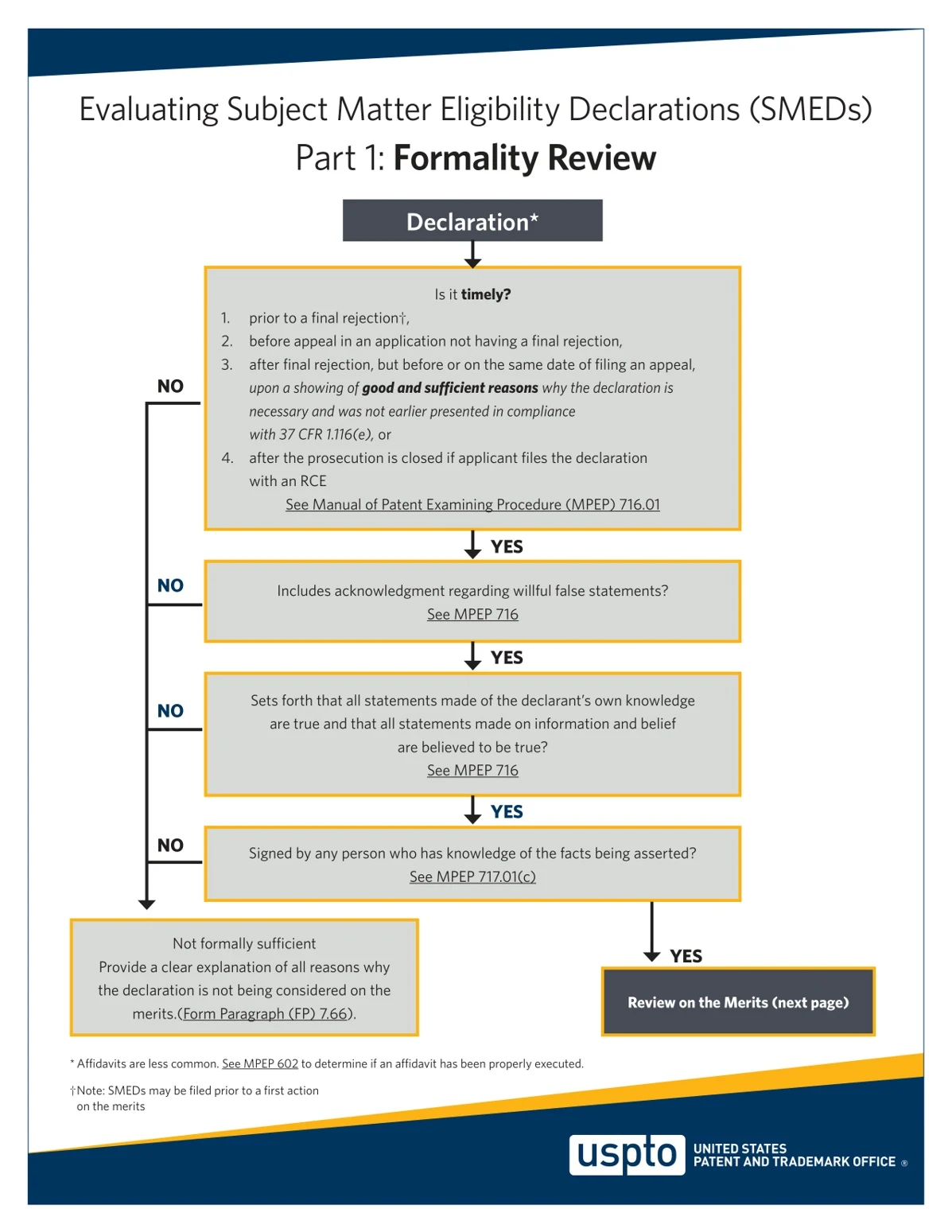
Read articleThe USPTO’s September 29, 2026 guidance on Subject Matter Eligibility Declarations (SMEDs) provides an opportunity to distinguish legally required corroboration from the factual support that makes inventor testimony persuasive. Drawing on Supreme Court and…
Read articleReturning merits institution determinations in inter partes review to panels of administrative patent judges should establish a clearer allocation of decisional responsibility within the United States Patent and Trademark Office. The Director-centered process…
Read articleThe USPTO permits DocuSign, Acrobat Sign, and comparable qualifying platforms for a broad range of patent documents, including inventor declarations, powers of attorney, prosecution papers, and evidentiary declarations. Under 37 C.F.R. § 1.4(d)(4), the…
Read articleChapter II of the Patent Cooperation Treaty offers applicants an optional opportunity to address examination objections, amend the application, and obtain an international preliminary examination report before national phase entry. Its greatest value arises…
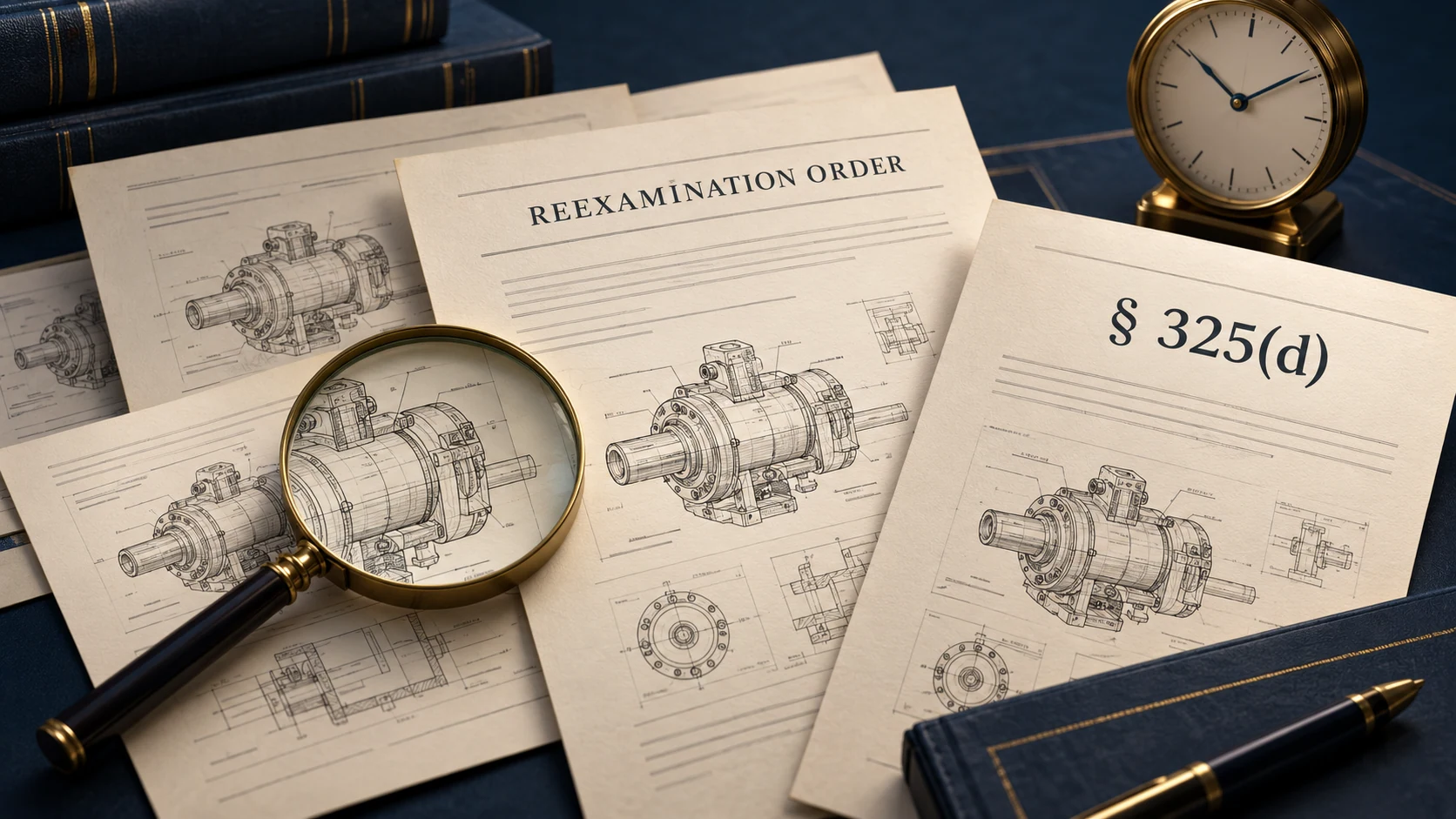
Read articleSection 325(d) permits the USPTO to reject an ex parte reexamination request that presents the same or substantially the same art or arguments previously presented to the Office, but repetition alone does not establish an entitlement to relief. For patent…
Read articleEffective information disclosure statement (IDS) practice requires coordinating the duty to disclose known, material, noncumulative information with the procedural requirements for obtaining examiner consideration. 37 C.F.R. §§ 1.56, 1.97–1.98 (2026). This…
Read articleThis article compares after-final practice at the United States Patent and Trademark Office (USPTO) with reexamination before the China National Intellectual Property Administration (CNIPA), using each system’s familiar procedures to explain the other to U.S.…
Read articleThe Quick Path Information Disclosure Statement (QPIDS) program provides a conditional procedure for obtaining examiner consideration of newly identified information after the issue fee has been paid but before the patent issues. Its use depends on a truthful…
Read articleA notice of allowance does not eliminate prosecution risk; it compresses the time available and narrows the procedures for correcting an application before issuance. Rule 312 offers a final, low-disruption opportunity to make a supported correction, but entry…
Read articlePatent protection in the United States, the United Kingdom, Germany, and the Unified Patent Court can extend beyond the ordinary meaning of the claims, but the governing tests and limits differ by forum. This article organizes the comparison around three…
Read articleMissing the twelve-month priority deadline after filing a U.S. provisional application does not necessarily foreclose international patent protection. A PCT application filed within the following two months may retain the provisional’s priority through a…
Read articleAn earlier patent application within a corporate portfolio can threaten a later application, but the available protection depends on which jurisdiction’s rules apply. This article uses 35 U.S.C. § 102(b)(2)(C) to explain Japan’s Article 29bis and South…
Read articleReviving patent rights before the USPTO requires counsel to identify the precise procedural defect, establish that the entire relevant delay was unintentional, and submit a complete, grantable petition. This article explains how to reconstruct the chronology,…
Read articleThis article provides a practical guide to using the World Intellectual Property Organization’s Digital Access Service (“WIPO DAS”) to exchange patent priority documents in U.S., PCT, and Chinese practice. Although DAS can eliminate repeated submission of…
Read articleEx parte Chowdhury confirms that whether alternatives form a proper Markush group depends on their technical unity in the context of the claimed invention, rather than on whether they are identical in every structural or functional respect. Context determines…
Read articleThis article compares the U.S. printed matter doctrine with the European Patent Office’s presentation-of-information and COMVIK frameworks, explaining that the systems overlap when semantic information is attached to otherwise known technology but are not…
Read articlePatent claims frequently recite “one or more processors configured to” perform multiple functions, but that language does not necessarily permit several processors to divide those functions among themselves. Federal Circuit decisions including Convolve,…
Read articleA multiple dependent claim can compress several claim combinations into one numbered claim. That economy is attractive in offices that charge by numbered claim, but it is less attractive in the United States, where fee calculations expand the claim into its…
Read articleUniversity inventions require two distinct but coordinated inquiries: inventorship follows the patent claims, while ownership follows the chain of title. The same federal inventorship standard applies to undergraduates, graduate students, postdoctoral…
Read articleThe Madrid Protocol is best understood not as a worldwide trademark or a full trademark analogue to the Patent Cooperation Treaty (“PCT”), but as a centralized filing and portfolio-administration mechanism that delivers requests for protection to designated…
Read articleThis article explains why, for employee inventions, naming the employer as the applicant under 35 U.S.C. § 118 and Rule 1.46 generally provides greater continuity and corporate control than naming the employee-inventor, particularly if the employee later…
Read articleThis article examines whether prior art cited or considered during prosecution of a parent application may support discretionary denial under 35 U.S.C. § 325(d), even when the reference does not appear on the face of the challenged patent. It explains that…
Read articleThis article explains how a single patent specification disclosing inventions A through F should be divided into later applications under U.S. and Chinese practice. In the United States, restricted inventions B and C should ordinarily be pursued in timely…
Read articleA U.S. national-stage application under 35 U.S.C. § 371 may qualify for accelerated examination through the Patent Prosecution Highway, but an international search report citing only “A” references does not itself establish eligibility. The applicant must…
Read articleThis article argues that a patent owner facing a third-party-requested ex parte reexamination alongside infringement litigation should ordinarily waive the optional post-order statement authorized by 35 U.S.C. § 304. Filing before the first Office action…
Read articlePatent claims frequently state not only what an invention is or does, but what it is intended to accomplish: reducing latency, improving stability, treating disease, preventing movement, or achieving a specified performance level. Whether that language…
Read articlePatent-prosecution files are neither categorically privileged nor automatically subject to production; each document requires a forum-specific analysis of its purpose, participants, confidentiality, and relationship to anticipated litigation. Attorney-client…
Read articleThe United States and Japan each offer a one-year route around certain patent-defeating disclosures. That shared duration is useful—and dangerously incomplete. The U.S. rule asks whether a disclosure falls within a source- and subject-matter-based exception…
Read articleArtificial-intelligence inventions are patentable in both the United States and China, but neither jurisdiction protects “AI” as an abstract label or rewards generic use of a known model in a new field. U.S. practice applies the Alice/Mayo eligibility…
Read articleThis article compares U.S. 37 C.F.R. § 1.132 declaration practice with the closest Korean analogue: a KIPO written argument supported by experimental results, comparative data, expert explanation, or other technical evidence. It explains that both systems use…
Read articleThis article examines how the meaning of “inventor” differs across the United States, Europe, South Korea, China, and Japan, focusing on whether inventorship is determined by the inventions claimed or by everything described in the application. It…
Read articleThis article compares how prosecution history can limit patent claim scope in the United States, the EPO, Korea, Japan, and China. In the United States, prosecution history operates through several related doctrines: ordinary claim construction, prosecution…
Read articleUSPTO Track One and CNIPA prioritized examination both accelerate patent prosecution, but they operate through fundamentally different gatekeeping models. USPTO Track One is a technology-agnostic, fee-based procedural option: if the applicant files a…
Read articleA deliberate prefiling prior-art search can serve as a specification-design tool, not merely a patentability screen. By identifying “framing references,” accurately describing their architectures and limitations, and tying each distinction to a claimed…
Read articleBayh–Dole is best understood not as an automatic university-ownership rule, but as a conditional government–contractor bargain that permits a contractor to retain title to qualifying federally funded inventions while preserving disclosure and patenting…
Read articleIn ex parte reexamination, a patent owner’s response to a non-final Office Action is often a critical opportunity to build the factual record, particularly when the rejection depends on technical assumptions about prior-art references, claim mappings, system…
Read articleThe article explains why Korean software and AI patent applications that appear eligible under Korean law may still face significant obstacles under U.S. patent-eligibility doctrine. Korean law focuses on whether the claimed invention is a “technical idea…
Read articleThis article argues that patent prosecutors should sometimes treat a restriction requirement as a commercial tool rather than a prosecution inconvenience. For platform technologies—such as a life-sciences program with claims to a compound, formulation,…
Read article“Small entity” and “micro entity” are not portable characteristics of a patent applicant. They are classifications created by U.S. law for particular applications and patents before the U.S. Patent and Trademark Office (“USPTO”). A company that pays…
Read articleLarge companies obtain patents not only to exclude competitors, but also to influence commercial decisions long before litigation occurs. A strategically constructed portfolio can deter operating competitors through a form of mutually assured destruction,…
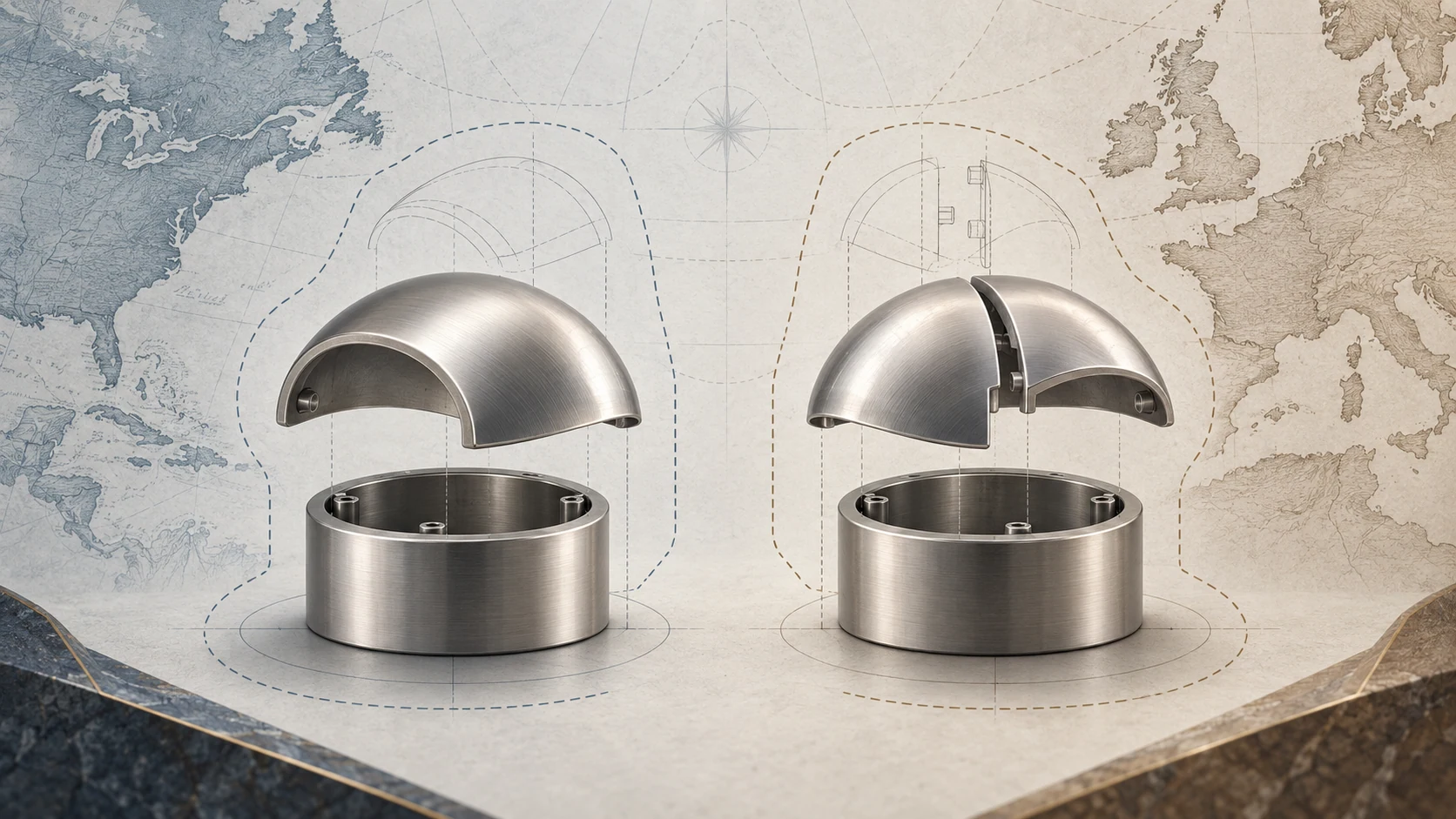
Read articleThis article compares U.S. design-patent law after LKQ Corp. v. GM Global Technology Operations LLC with the European Union’s unitary design regime, highlighting the different perspectives of the U.S. “ordinary designer” and the EU “informed user.” Although…
Read articleA patent application is legally evaluated through the lens of a person of ordinary skill in the art, but its practical success depends on a much broader audience: patent examiners, continuation counsel, foreign associates and national-phase examiners, judges,…
Read articleThis article compares the USPTO ex parte appeal process before the PTAB with the JPO appeal against an examiner’s decision of refusal, using each system as a teaching framework for practitioners trained in the other. Its central point is that the two systems…
Read articleThe USPTO’s new pre-order paper procedure gives patent owners a narrow but potentially consequential opportunity to challenge an ex parte reexamination request before the Office orders reexamination, but the article emphasizes that this opportunity must be…
Read articleThis article argues that examiner-level patent prosecution is better understood as a form of mediative advocacy than as the adversarial process for which lawyers are traditionally trained. Unlike litigation, prosecution involves no opposing claimant, the…
Read articleU.S. continuation practice is a uniquely powerful portfolio-management tool because it allows applicants to keep a patent family pending and pursue additional same-disclosure claim sets as markets, competitors, prior art, licensing needs, and litigation…
Read articleThis article compares how the USPTO and EPO treat “secret prior art”—earlier-filed patent applications that were not public when a later application was filed but later acquire prior-art effect after publication. In the United States, AIA § 102(a)(2) treats…
Read articleFor inventions developed in or across the United States and China, the first patent filing decision should begin with a territorial invention-location analysis, not with inventor nationality, corporate headquarters, or preferred filing venue. The United…
Read articleExaminer interviews are a valuable prosecution tool, but their strategic significance varies sharply by jurisdiction. The central question is not simply whether an examiner will communicate with the applicant, but whether that communication carries procedural…
Read articleThis article explains why responding to an Office Action in ex parte reexamination requires a different strategy than responding during ordinary patent prosecution. In ordinary prosecution, the applicant is generally trying to obtain commercially useful claim…
Read articleThis article argues that Subject Matter Eligibility Declarations (“SMEDs”) can be valuable prosecution tools for building a factual record in response to § 101 rejections, but only if they are used with discipline. A SMED should not ask an inventor or expert…
Read articleThis article explains that patent-term relief in Korea and the United States should be analyzed by the legal source of the lost time, not by the shared shorthand of “extension.” In the United States, patent term adjustment compensates for patent-office delay…
Read articleThis article compares U.S. analogous-art doctrine with the EPO problem-solution approach through Sanofi-Aventis Deutschland GmbH v. Mylan Pharmaceuticals Inc., where the Federal Circuit rejected an obviousness challenge because the petitioner linked a…
Read articlePatent prosecution is legal knowledge work, but it is also repeatable process work: new application filings, formalities, assignments, IDS submissions, Office communication processing, allowance, issuance, maintenance fees, foreign filing, and portfolio…
Read articleThe Office action arrives, and the unextended response date is entered. Substantive work, however, is scheduled backward from that date. By the time a proposed amendment reaches the inventor, the examiner has limited interview availability, foreign counsel…
Read articleEvery patent prosecutor has heard some version of the same question: Why should an applicant disclose a reference that might be used to reject the application?
Read articleA PCT application designating the United States gives applicants a choice that does not exist in the same way in many other jurisdictions: enter the U.S. national stage under 35 U.S.C. § 371, or file a domestic U.S. application under 35 U.S.C. § 111(a)…
Read articleThe easiest comparative mistake is to say that U.S. “written description” and Chinese “support by the description” are the same doctrine under different names. They are not. They respond to a similar overclaiming problem, but they operate through different…
Read articleThe recent Federal Circuit cases on patent eligibility do not simply show that U.S. law has become hostile to particular technologies. They show something more specific and more institutional: the United States often asks threshold eligibility doctrine to…
Read articleConsider a familiar device-company scenario. A regulatory team prepares a 510(k) and tells FDA that a design feature tracks a predicate device, is supported by familiar engineering literature, and does not raise new questions of safety or effectiveness.…
Read articleRestriction requirements are often treated as administrative noise—something to get past on the way to allowance. The Federal 2025 decision in Focus Products Group International, LLC v. Kartri Sales Co. shows how dangerous that mindset can be. In that case, a…
Read articleTry another title, summary keyword, or topic.
Articles retain their original publication and update dates. They provide general information and may discuss law or practice as it stood at that time. They are not legal advice for a particular matter. RSS feed ↗